


AI search SEO starts with the same business question as any good website improvement: can the right visitor find a clear, useful answer and take the next step? New search interfaces do not make your service pages, technical foundations, or credibility less important. They make it more valuable to explain what you do in a way a reader can understand without guessing.
What changed in 2026
Google published a new resource about optimizing for generative AI features in Search on May 15, 2026. The announcement emphasises valuable original content and says established SEO practices remain foundational. It also addresses common AEO and GEO misconceptions. That is a reason to review content quality and implementation, not evidence that a special plugin or a particular wording guarantees an AI citation.
Source: Google guidance on optimizing for generative AI in Search. News context checked November 15, 2026.
1. Give AI search SEO a specific audience
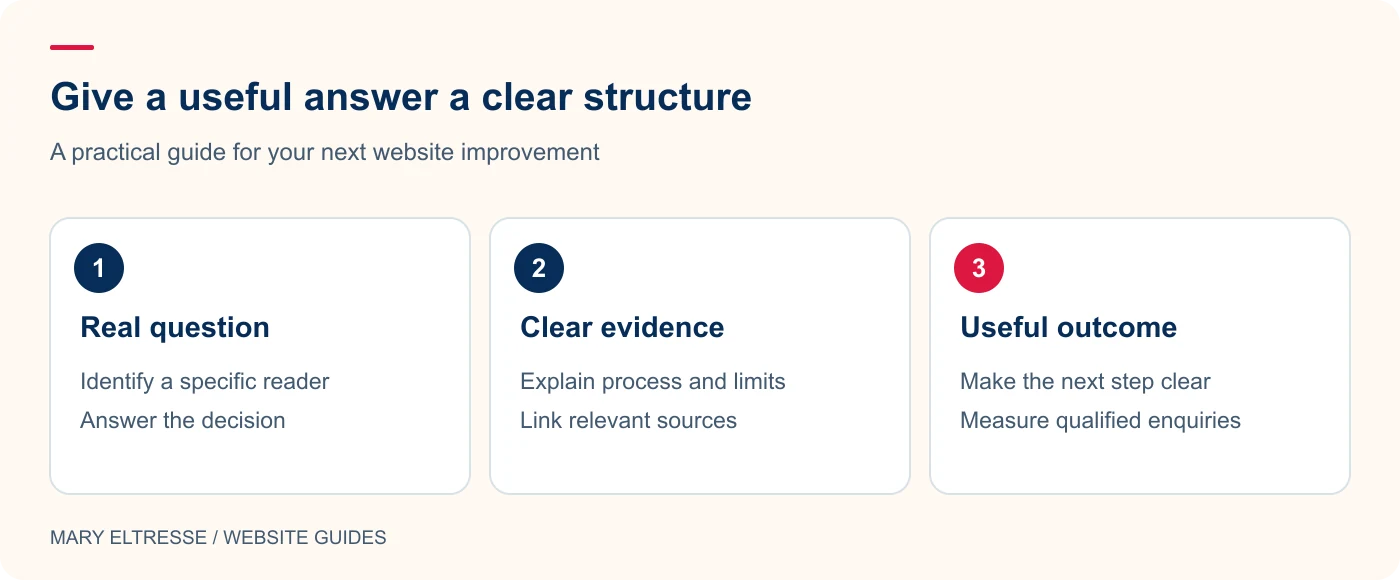
Choose a real reader and a real question for each important page. A small-business owner comparing website-care options needs different information from a developer looking for a code example. Describe the problem, the limits of the service, and the decision the reader should be able to make. Avoid expanding one short page into an unfocused collection of every keyword in the industry. A focused answer is easier to maintain, link to, and evaluate against actual enquiries.
2. Add evidence that only your business can supply
Explain your process, include relevant examples you are allowed to share, and identify when a recommendation depends on the website. Do not invent client results, conversion gains, certifications, or personal experience to make an article sound authoritative. A useful before-and-after explanation can be qualitative if you do not have reliable measurements. If a number is available, explain the test conditions. Clear boundaries and honest detail make the content more useful than a generic paragraph repeated across several service pages.
Example: Hypothetical example: A website-care page says only “complete peace of mind.” Replace the vague promise with what is included, how requests are handled, what is excluded, and who the plan suits. Link to a relevant maintenance guide and provide a clear enquiry route. The result helps a customer compare services without relying on an AI-related claim.
3. Make the page understandable before adding markup
Use one descriptive page title, logical headings, concise summaries, and links that say where they go. Put important service details in readable page content rather than only inside an image. Give comparisons clear criteria, and make prices or eligibility conditions easy to find when they apply. Structured data should describe the visible information accurately; it should not be used to claim reviews or capabilities that the visitor cannot verify. Start with the page itself, then review its supporting metadata.
4. Review technical access and basic usability
Check that intended public pages can be reached, linked internally, and rendered without an account. Review indexing controls carefully and do not change robots rules simply because a social post recommends a new AI trick. Test mobile navigation, forms, and loading behaviour. A discoverable page still needs to work when someone arrives. The WordPress optimization guide is a useful companion when the content is clear but the website needs improvements to speed, structure, or everyday usability.
Example: Hypothetical example: A new article attracts more visits but no relevant enquiries. Review the queries and the page’s next step before calling the work a success. If readers want a tutorial while the page promotes a service, improve the connection between the answer and the offer. Keep a change log so the evaluation distinguishes content edits from other campaigns.
5. Measure outcomes rather than a promised citation
Track relevant search queries, visits to important pages, and meaningful actions such as qualified enquiries. Look for changes over a sensible reporting period instead of attributing every fluctuation to one edit. Keep a change log so the report can distinguish new content from a redesign or campaign. AI search SEO does not come with a guaranteed placement or a fixed recipe for inclusion. A useful evaluation explains whether the right people are finding the right information and what they do next.
6. Keep a modest editorial maintenance cycle
Assign an owner to review dated advice, broken links, service details, and screenshots. If an article discusses a beta or a proposed feature, update it when the status changes. Consolidate overlapping pages when they compete to answer the same question without adding value. My website-care routine covers the value of scheduled checks; the same discipline applies to content. A smaller collection of accurate useful articles is easier to support than a large archive of unattended announcements.
Your practical checklist
- Identify the reader and the decision the page supports.
- Replace generic claims with honest process details and evidence.
- Use clear titles, headings, and descriptive internal links.
- Check public access, indexing intentions, and mobile usability.
- Track qualified actions alongside search visibility.
- Review dated claims and source links on a schedule.
Frequently asked questions
Do meta keywords make a page appear in AI search?
No guaranteed inclusion follows from keyword fields. Use a focus keyword to keep the editorial brief clear, then write useful content and configure the actual SEO title and description.
Can a plugin guarantee AI visibility?
No. A plugin can help implement particular technical or editorial tasks, but it cannot guarantee how a search service selects or displays a page.
Make your next website improvement count
Want a practical AI search SEO review of your service pages? Contact Mary Eltresse for clear content and technical recommendations grounded in your website goals.